Dallas-Fort Worth
More gain before feedback in your church sound system
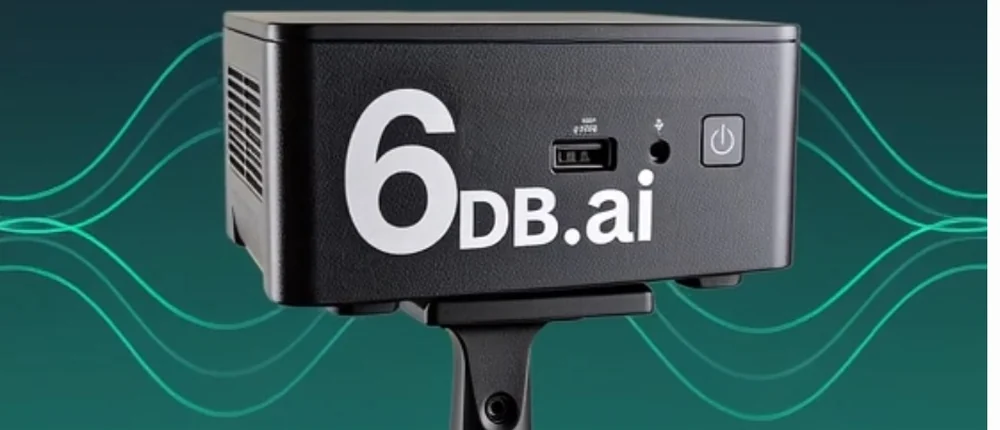
We insert real-time De-Feedback processing into the sound system you already own, then measure the difference through your own speakers while your own team listens. Churches we have demonstrated it in have gained 5 to 6 dB of usable level before the room starts to ring.
The problem
Your system is probably running quieter than it can
Most churches are not short of speakers or short of amplifier power. They are short of headroom. Somewhere below the level the room needs, a frequency starts to ring, and from that point on every decision the operator makes is a workaround.
The pastor's lapel gets pulled back. The choir microphones stay low. Someone cuts 250 Hz and 2 kHz out of the vocal group to buy a couple of decibels, and the voices go thin. Unused microphones get muted aggressively so nobody opens one by accident. The service gets through, and it sounds smaller than it should.
That ceiling is a property of the loop, not of your gear. Sound leaves the speaker, arrives back at an open microphone, and goes around again. When the round trip stops losing energy, the system rings. Everything a good operator does is an attempt to keep that loop under control by hand.
Symptoms what churches describe when they call
- Ringing during the sermon whenever the microphone comes up
- Worship vocals kept below where the band sits
- Heavy EQ cuts holding the system together
- Lapel microphones that only work in one spot on the platform
- Volunteer operators who are managing risk instead of mixing
The demo
Church sound feedback control, measured in your own room
We do not ask you to take the improvement on trust, and we do not measure it in someone else's building. We bring the system to your sanctuary, patch it into your console, and let your operator hear the same microphone with the processing in and out.
We schedule around your rehearsal
Your audio director or tech lead picks a time when the team is already in the building and the platform is set the way it normally is. A midweek rehearsal works better than an empty room, because the microphones are where they will be on Sunday.
We insert into your existing routing
The processor goes inline at line level, across your inserts or between the console output and the amplifiers. It is patched at line level and unpatched the same way. If we walked out an hour later, your system would be the way we found it.
We set unity bypass before we set anything else
The bypass has to sit at the same level as the processed path, or the comparison is worthless. Louder always sounds better. We match the two so that when your operator flips between them, level is the one thing that has not changed.
Your team runs the A and B
Your operator brings the fader up on your pastor's microphone until it rings, notes where that happened, then does it again with the processing in. The number in between is the result, and your own team is the one that produces it.
You decide afterward
If the difference is worth having, we can leave the system with you on a rental basis or talk about a longer arrangement. If it is not, you have spent 90 minutes and learned where your room's ceiling is, which is useful either way.
Where it helps
What changes in a worship service
Wireless handhelds, lapels, headsets
Wireless microphones for churches
Wireless is where most sanctuaries lose first, because a lapel or a headset sits closer to the platform speakers than a handheld ever does and the person wearing it moves. Raising the gain margin means a lapel keeps working when the pastor walks toward the front rows instead of only in the middle of the platform.
It also takes the pressure off the operator to ride a fader on someone who is walking around.
Loudspeakers mains, delays, monitors
Speakers for a church sound system
Where your speakers point decides how much of what they produce arrives back at the microphones. Ceiling arrays and platform-edge cabinets both put energy into the same space the choir microphones are listening to.
New loudspeakers change that geometry and cost a great deal. Processing changes what the loop does with the geometry you already have, which is why we suggest measuring before anyone quotes you a system.
Choir overheads and area microphones
Choir and instrument coverage
Choir microphones are the ones most often left almost closed. They are far from the source, so they need a lot of gain, and they hear the room more than they hear the choir. Most operators settle for a token amount of level and let the room carry it.
With more margin available, those microphones can come up to where they are contributing rather than sitting as insurance.
Smaller rooms
Small church sound systems and portable rigs
A small sanctuary is often harder than a large one. The microphones and the speakers are close together, the ceiling is low and flat, and there is rarely any acoustic treatment. Church plants running a portable sound system into a school cafeteria or a rented hall have the same problem with none of the control, because the room changes every week.
The processing does not care about the size of the room. It responds to what is happening in the loop right now, which is why it transfers from a 900-seat sanctuary to a portable rig without being reconfigured. We tune it on site for the room you are in that day.
If you are weighing a full sound system for a church against fixing the headroom you already have, measuring first tells you which problem you have.
Beyond worship
Meeting rooms, hybrid events and live production
The same problem shows up anywhere microphones and loudspeakers share a hard room. We run this system on corporate and event work across Dallas-Fort Worth through Dallas Event Audio.
Corporate town halls and all-hands
Presenters stand near the loudspeakers because that is where the screen is. At Alkami Technology we measured 6 dB of extra usable gain in a reverberant meeting space running three handhelds and a lavalier, with about 100 people in the room.
Hybrid meetings and broadcast feeds
Front-end feedback control helps the remote audience as much as the room, because the same processed signal feeds the stream. In that Alkami meeting more than 800 people were listening on Zoom, and the improvement in speech clarity carried straight through to them.
Weddings, toasts and speeches
A father of the bride standing inches from a Bassboss DV12 with a Shure Beta 58 is close to the worst microphone placement there is. That is a situation this processing was built for, and it is one we run regularly.
Questions
Common questions about church sound feedback
How much more gain can we get?
In the rooms we have measured, between 5 and 6 dB of additional usable gain before feedback. At Alkami Technology we measured 6 dB in a reverberant meeting space with three handheld microphones and a lavalier open at once. In a mid-sized sanctuary we measured 5 dB, and the operator was able to run the pastor's microphone at 95 percent fader instead of stopping at 75 percent.
Do we have to replace our mixer or our speakers?
No. The processing is inserted temporarily into your existing signal chain, usually across the inserts or between your mixer output and your amplifier. Your mixer, your speakers, your microphones and your room stay as they are. That is the point of demonstrating it this way: the processing is the one thing that changes.
Will it work with an analog mixer?
Yes. We connect at line level, so an analog console works the same way a digital one does. Tell us the make and model when you book and we will bring the right cabling for your patch points.
Does it change how the vocals sound?
It removes the frequencies that are about to ring and leaves the rest of the signal alone. Most operators describe the result as the same voice with more level available. It is not a broadband EQ cut, so you do not lose presence the way you do when you pull 2 kHz out of everything to buy headroom.
How long does a demo take?
About 90 minutes on site, scheduled around a rehearsal or a sound check so your own team is there to hear it. We insert the system, set unity bypass so the comparison is honest, then A and B it with your operator running your own microphones.
Which parts of Dallas-Fort Worth do you cover?
We work across the Metroplex, roughly 40 miles out from Hurst, which covers Dallas, Fort Worth, Arlington, Southlake, Frisco, Plano, Denton and the surrounding towns. If your church is further out, ask anyway and we will tell you honestly whether it works.
Book a demo in your sanctuary
Send us what you are running and we will find a rehearsal to come out to.
Email one address, straight to the person who runs the demo
Four things make the reply useful on the first pass:
- The make and model of your mixer, or that it is analog
- How many microphones are open at once on a normal Sunday
- Roughly what the room is like: seats, ceiling, where the speakers point
- A rehearsal or sound check time that would work
Tell us about your room and we will send you a straightforward quote the same day.
Find out what your room is capable of
We bring the system to your sanctuary, patch it into the console you already use, and measure the difference with your own team listening.