The technology
How De-Feedback works
Real-time suppression that removes the frequency the loop is trying to build on, for as long as it is trying, and then gets out of the way. This is what it does, why traditional approaches trade clarity for stability, and where the limits are.
Start here
What is microphone feedback
Sound leaves a loudspeaker and some of it arrives back at an open microphone. That microphone sends it around the system again. If the round trip loses energy, the sound decays and nobody notices. If the round trip returns as much energy as it started with, the loop sustains itself and you get the ring.
Which frequency it picks is decided by the room, the microphone's pattern, where the loudspeakers point and how far the microphone is from them. This is why the same rig behaves differently in two buildings, and why a system that was fine for years starts ringing after someone moves a speaker.
The distance between where a system sits and where that loop closes is the gain margin. Every operator works inside it, whether or not they think about it in those terms. Ringing out a room, cutting problem frequencies, muting unused microphones and keeping lapels away from the front fills are all ways of buying margin by hand.
The usual approaches
Why traditional feedback control costs you something
Every conventional method buys stability by removing something you wanted. Knowing what each one takes is how you tell whether it is the right trade for your room.
Method fixed notch filters
Ringing out with narrow cuts
Find the frequencies that ring, park a filter on each one, and the system is stable. The filters stay in whether or not the condition that caused them is still there, and by the end of a long event you have removed a set of frequencies from every voice that goes through that channel.
Method automatic gain control
Pulling the level down
An automatic system that reduces overall level when things get loud will stop feedback, because everything gets quieter. It also flattens dynamics and removes the difference between a pastor speaking and a pastor making a point.
Method frequency shifting
Detuning the loop
Shifting the whole signal by a few hertz stops the loop from lining up with itself, which buys real margin. It also puts the amplified voice slightly out of tune with the acoustic one, which is noticeable on sustained singing.
Method the operator
Riding it by hand
A good operator watching a familiar room does this well. It requires constant attention, it does not survive a substitute on a holiday weekend, and it fails when something on the platform moves and nobody expected it.
The approach
Suppression that is temporary by design
The system watches the incoming signal for the pattern that precedes a ring: energy concentrating at one frequency and growing rather than decaying. That growth is what distinguishes an approaching feedback tone from a sustained note somebody meant to sing.
When it finds one, it suppresses that frequency and holds it down while the loop is still trying to build there. When the condition passes, because the person moved or the operator pulled the fader or the room changed, the suppression comes off and the frequency returns to the signal.
The result is that a vocal accumulates fewer permanent holes over a long service, and the margin you gained is available on the next microphone that needs it rather than being spent on the last one.
What it does not do is make a system louder than the room will allow. It moves the ceiling up by a measurable amount, and in the rooms we have tested that amount has been 5 to 6 dB. It is worth knowing what that means: 6 dB is a doubling of amplitude, and it is the same change you get by halving your distance from a loudspeaker.
The other half
Room reverb and speech clarity
Feedback is the failure you hear. Reverb is the one you do not, and in a hard sanctuary it does more damage to intelligibility over the course of a service.
In a reverberant room, each syllable is still arriving as reflections while the next one is being spoken. The congregation hears both at once. The words are all there and they are harder to follow, and the effect is worse at the back and worse for anyone with hearing loss.
Reducing how much of that reflected field goes back through the amplified path lifts clarity without turning anything up. On the broadcast side the benefit is larger, because a remote listener has none of the visual cues that help a person in the room fill in a smeared word.
Latency
Under 2 milliseconds, and why that number matters
Performers hearing themselves
Anyone singing into a wedge or on in-ears hears their own voice back through the system. Delay in that path is uncomfortable before it is audible as an echo, and singers compensate for it in ways that make them sound worse.
Broadcast and streaming
If the audio path is slower than the video path, the stream drifts out of sync and remote viewers notice within a sentence. A processing block measured in single milliseconds stays well inside what any encoder will absorb.
Putting it in scale
Sound travels roughly one foot per millisecond. Under 2 milliseconds of processing is about the same delay as standing two feet further back from the speaker, which is a step to the side. A 16 sample buffer at 48 kHz is what gets it there.
Where it is used
Rooms this is built for
Worship and spoken word
Multiple open microphones, a hard room, volunteer operators and no chance of a second take. This is the case the system gets used for most, and the one the church demo is built around.
Corporate and hybrid meetings
Presenters standing near the loudspeakers, a room that was designed to look good rather than sound good, and a remote audience listening to the same mix. Both audiences benefit from the same change.
Live events and receptions
Toasts delivered a few feet from a full-range cabinet, handhelds passed between people who have never used one, and no time to ring out a room between sets.
Questions
Technical questions
What is microphone feedback?
Amplified sound leaves a loudspeaker, arrives back at an open microphone, and gets amplified again. If that round trip returns as much energy as it started with, the loop sustains itself at whatever frequency the room favors, and you hear the ring or the howl. It is a property of the loop, so it depends on microphone placement, gain, speaker aim and the room, not on the quality of any single piece of gear.
How is this different from a notch filter or a feedback destroyer?
A traditional feedback suppressor waits for a ring, finds the frequency, and parks a narrow filter on it. It works, and over an evening you accumulate filters until the vocal has holes in it. This system suppresses the frequency for as long as the loop is trying to build there and then stops, so the filter is not left behind after the condition has passed.
Does it add latency?
Under 2 milliseconds of added processing latency. That matters for anyone hearing themselves in a wedge or on in-ears, and it matters for lip sync on a broadcast feed. For comparison, standing about two feet further from a loudspeaker adds the same delay.
Will it fix a reverberant room?
It reduces how much of the reverberant field ends up in the amplified signal, which usually reads as clearer speech. It does not treat the room. If the congregation is hearing long reflections directly from the walls, acoustic treatment or better speaker aim is the fix, and we will say so.
What hardware does it run on?
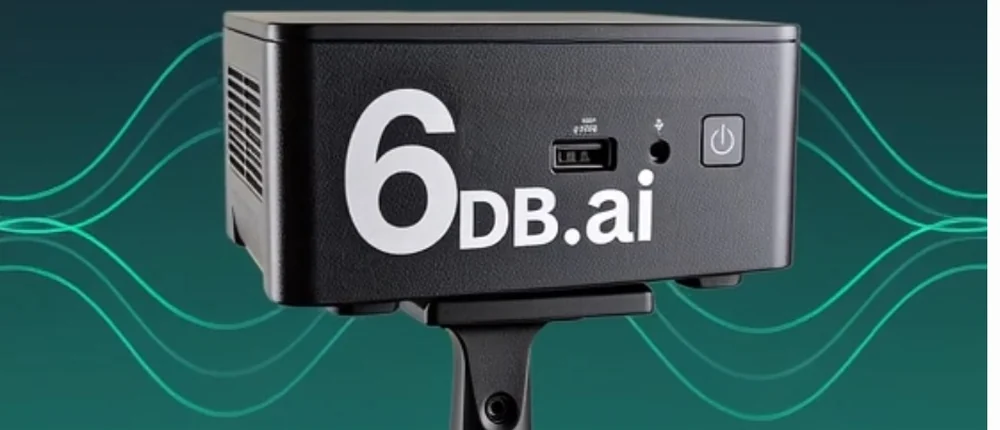
A SNUC option 2 mini PC running the De-Feedback VST host built by Alpha Labs, with a Focusrite Scarlett interface for the analog connections. It is small enough to sit on top of a rack. Running fixed hardware is what lets it hold a 16 sample buffer at 48 kHz, which is where the low latency figure comes from. The setup guide covers the whole configuration.
The number that matters is the one from your room
Everything on this page describes what the processing does. What it is worth in your building is something we measure on site.